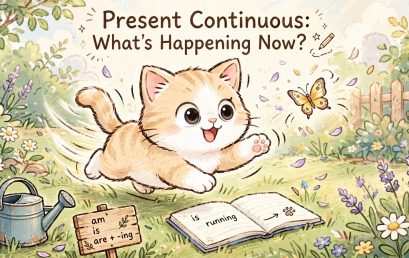
Present Continuous: What’s Happening Now?
📚 English Grammar Series — Level 1: Beginner (Part 4 of 5) What’s happening right now? The present continuous (also called present progressive) is the tense of live action — phone calls, live commentary, temporary situations, and even fixed future plans. Formula first: am/is/are + verb-ing. 1. Spelling Rules for Verb-ing Rule Example Most verbs […]
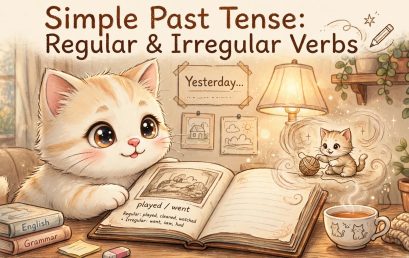
Simple Past Tense: Regular and Irregular Verbs
📚 English Grammar Series — Level 1: Beginner (Part 3 of 5) Want to tell stories about yesterday, last weekend, or your childhood? You need the simple past tense — the storyteller’s tense. It has two systems to learn: easy regular verbs (just add -ed) and irregular verbs (which change completely but are used constantly, […]
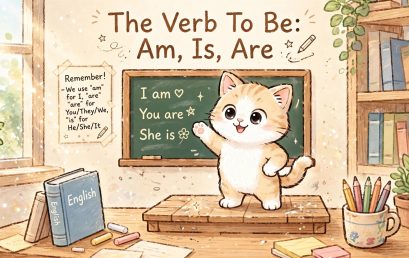
The Verb “To Be”: Am, Is, and Are Explained
📚 English Grammar Series — Level 1: Beginner (Part 2 of 5) The verb “to be” (am, is, are) is the single most-used verb in English — and unlike every other verb, it never needs a helper for negatives and questions. Learn it deeply once, and hundreds of everyday sentences become easy. 1. Am, Is, […]
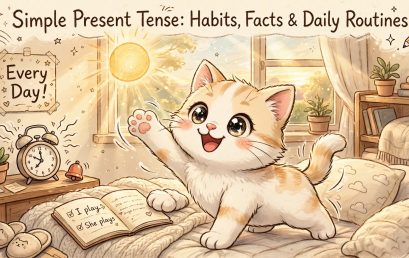
Simple Present Tense: Habits, Facts, and Daily Routines
📚 English Grammar Series — Level 1: Beginner (Part 1 of 5) The simple present tense is the backbone of everyday English. We use it far more often than learners expect — not just for “present” things, but for habits, routines, facts about the world, schedules, and even opinions and feelings. Master this tense and […]

Jangan Pakai HWD terus!!!
Zaman sekarang masih ngucapin orang nikah pakai ‘Happy Wedding’? Aduh, basi banget gak sih! Yuk, upgrade ucapan kamu biar lebih keren. Nih, beberapa alternatif kalimat bahasa Inggris buat ngucapin selamat nikah yang dijamin gak monoton:

How can I improve my listening?
Ernest Hemingway once said, “When people talk, listen completely. Most people never listen.”

Ready to Network? Boost Your Small Talk Game!”
Making conversation can feel tricky, especially if you’re shy or struggle with social anxiety. However, small talk is a great way to start a conversation and build a connection, whether in casual or professional settings.

How to use comparative and superlative adverbs in English
Learn how to form and use comparative and superlative adverbs in English. Discover the rules, exceptions, and practical examples to improve your language skills.
